
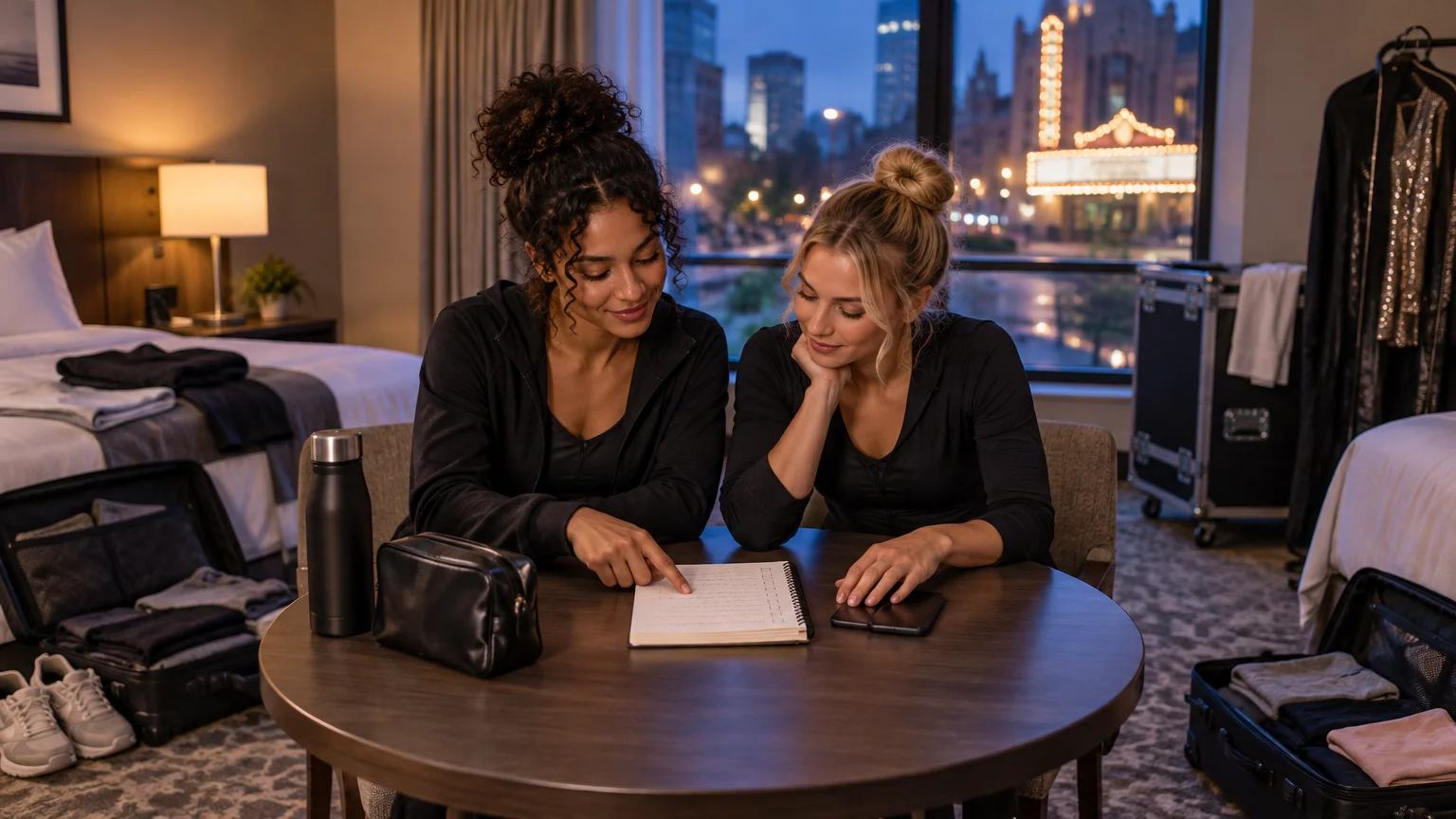
Shared Hotel Rooms on Tour: Ground Rules That Reduce Friction
A shared hotel room can save a tour money, but it can also turn one person’s alarm, guest or pile of damp costumes into the entire company’s problem. The useful answer is to settle the big terms before departure, give each pair a short roommate agreement and create a room-change process that does not require a backstage showdown.
This is not about making everyone become best friends. It is about protecting sleep, privacy and recovery so the cast can deliver the next show with energy left in the tank.
TLDR
- Confirm in writing whether rooms are single or shared, who pays and whether performers can choose independent lodging.
- Match roommates through a short preference form instead of assumptions about friendship, age or company status.
- Agree on sleep, alarms, bathroom timing, temperature, guests, food and cleanliness before the first night.
- Give performers a private route for reporting accessibility, medical, safety or serious compatibility concerns.
- Use a calm escalation process: direct conversation when appropriate, tour-manager help and reassignment when necessary.
Start with the contract, rider or written tour policy
There is no universal rule that touring performers must share hotel rooms. Occupancy can depend on a collective agreement, individual contract, negotiated rider, production policy, budget and route. Private rooms, optional sharing, independently arranged lodging and other travel setups all appear in professional touring.
Recent agreements show how much the terms can vary. Actors’ Equity’s 2023 national-touring summary described producer-paid housing with single or double occupancy at the actor’s option, as well as an option to decline company housing and arrange lodging independently. That agreement was stated to run through September 7, 2026, so it is an example to examine rather than a promise about another production’s terms.
The Canadian Actors’ Equity Association’s overseas-rider guidance calls for accommodations, travel, per diem and insurance to be addressed in a negotiated rider. Its sample language expects supplied housing to be safe, sanitary and satisfactory, with private single occupancy. In the UK, the Bectu and Prospect good-practice guide for touring productions says room sharing should be optional and agreed rather than automatic.
Before signing, ask for written answers on occupancy, bed setup, roommate selection, hotel payment, deposits, per diem or housing buyouts, ground transportation and the procedure for requesting an accommodation. If the reply is vague, that vagueness will not become more charming after a late load-out.
Make a roommate agreement before the first key card
The best room rules are specific enough to prevent recurring friction and short enough for people to remember. Each pair can complete a five-minute check-in on arrival, then save the agreement in a shared message.
| Topic | Ground rule to settle | Why it matters |
|---|---|---|
| Sleep and alarms | Set quiet hours, alarm limits and rules for snoozing or taking early calls outside. | Different call times should not destroy both performers’ sleep. |
| Bathroom | Choose a rough order for showers, hair, makeup and costume preparation. | A shared sink becomes a bottleneck quickly. |
| Temperature and light | Agree on a temperature range and when overhead lights go off. | Small environmental disputes feel enormous when people are tired. |
| Guests | Require mutual consent before anyone enters the room and set a firm departure time. | Both occupants need control over their sleeping space. |
| Food and gear | Designate areas for meals, luggage, laundry and performance equipment. | Clear zones keep costumes away from spills and walkways open. |
| Noise and calls | Use headphones and take long or emotional calls to an appropriate common area when practical. | Hotel downtime may be the only private recovery period in the day. |
| Privacy | Ask before borrowing, photographing, posting or discussing anything seen in the room. | Sharing space does not erase personal boundaries. |
Treat these rules as a working agreement, not a personality test. Someone who needs darkness at 10 p.m. and someone who edits videos until 1 a.m. may both be perfectly professional; they are simply a poor room match.
Match habits, not social circles
Room assignments often go wrong when production pairs the obvious friends and considers the job finished. Friendship does not guarantee compatible sleep schedules, room temperatures or preparation routines.
A private matching form can ask about bedtime, wake time, alarm habits, preferred temperature, sensitivity to light or noise, smoking exposure, guest comfort and willingness to switch roommates during the run. Give performers a way to identify a serious conflict without explaining it to the whole company.
Accessibility, health and safety needs belong in a confidential conversation with the appropriate manager, not in a roommate debate. CAEA’s guidance specifically identifies late hours, transit gaps, accessibility and health needs as considerations when arranging safe, convenient transportation. Lodging and transport should be planned together: a cheap hotel is not truly practical if performers cannot get safely back after the show.
Protect the recovery window
A performer’s hotel time may include eating, stretching, laundry, family calls and the rare luxury of silence. Reported accounts collected by Backstage from touring performers describe both room sharing and the value of getting time alone away from the company. Those experiences are not universal rules, but they underline why recovery space matters.
Production can help by avoiding room meetings, keeping nonurgent messages within reasonable hours and building an itinerary with actual recovery opportunities. The same principle belongs in the wider tour schedule and recovery plan: sleep is part of performance readiness, not empty time waiting to be filled.
For longer stops, basic facilities matter too. Actors’ Equity’s 2023 touring summary included a kitchen-equipped lodging option for stays of four weeks or longer when official housing lacked a kitchen. It also addressed producer-funded transportation when lodging was more than half a mile from the theatre. These details show why the hotel conversation should cover daily function, not just the room rate.
Use a conflict process that does not become a second show
Minor irritation should have a simple route toward resolution. Serious safety or harassment concerns should go directly to the designated manager rather than through an informal roommate negotiation.
- Name the behavior and request a specific change: “Could we keep calls on headphones after 11?” works better than “You are impossible to room with.”
- If the issue continues, document the practical facts and ask the tour manager or company manager to mediate.
- If sleep, health, accessibility or safety remains affected, use the production’s room-change process. Reassignment is a logistics decision, not a public verdict on either performer.
Production should decide in advance who can authorize a switch, whether spare rooms exist, how added costs are handled and what happens when the hotel is sold out. A policy that begins only after a conflict erupts is just improvisation in business casual.
The pre-tour lodging checklist
Before travel begins, production should put the following information in one private, easy-to-find document. Keep sensitive room assignments and personal needs separate from broadly distributed materials such as the live-event call sheet.
- Single or shared occupancy and the number and type of beds
- Who selects roommates and when assignments become final
- Who pays the room rate, taxes, deposits and incidentals
- Check-in, late-arrival and key-replacement procedures
- Hotel-to-venue transportation, especially after late calls
- How to request accessibility, medical or safety accommodations
- Who receives roommate concerns and how reassignments work
- Whether performers may decline company housing and under what terms
Clear rules let the show stay center stage
Shared hotel rooms work best when nobody has to guess what they agreed to. Confirm the lodging terms in writing, match people by habits, establish boundaries on night one and give the company a dignified way to fix a bad pairing. That small amount of planning keeps private friction from following the cast into warm-up, places and the opening number.