
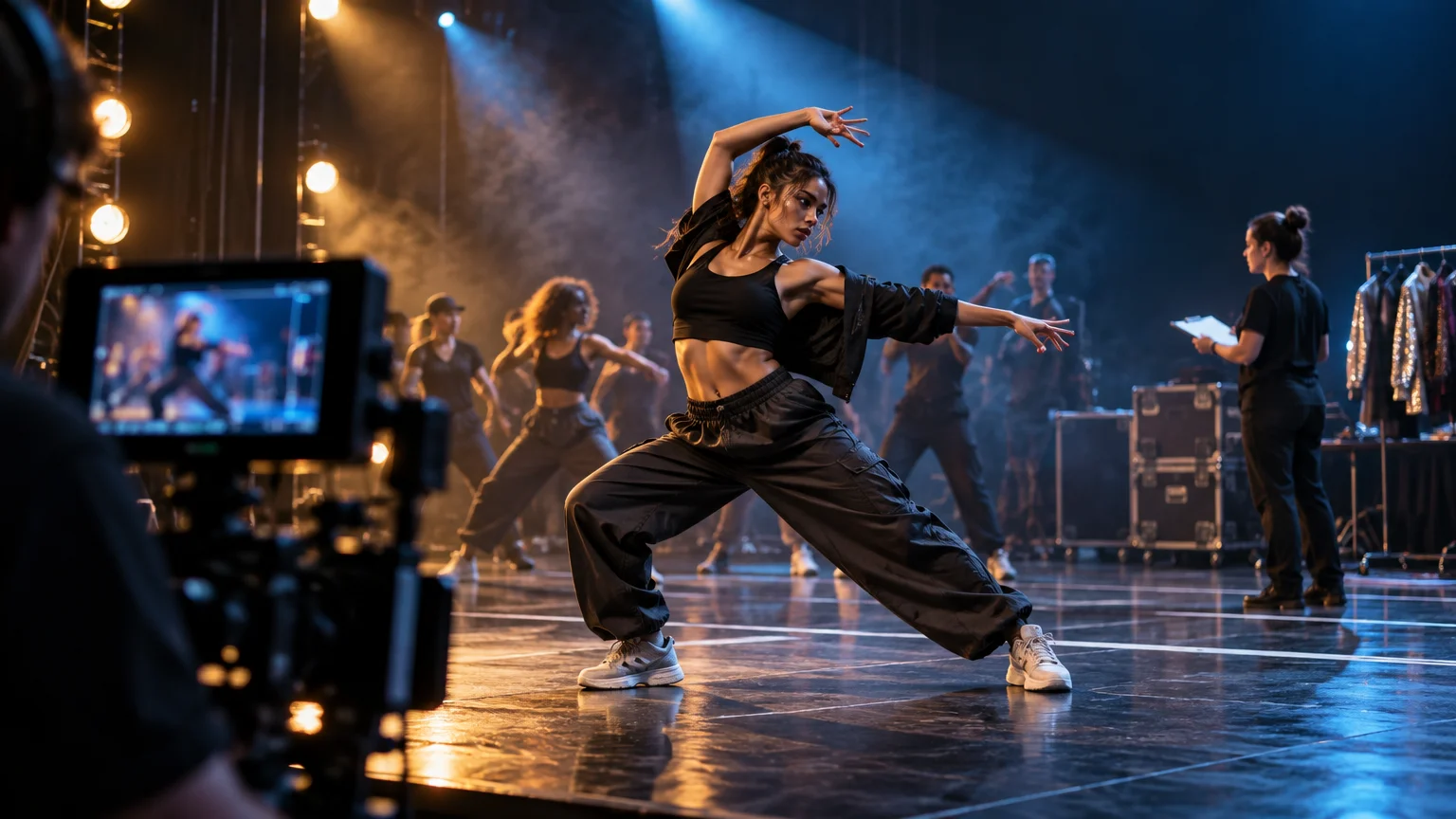
Promo Reels: What to Put in the First 30 Seconds
A strong promo reel does not spend its opening seconds clearing its throat. It puts the performer onstage, on camera or in motion almost immediately. Within 30 seconds, a casting director, producer or booking client should understand who you are, what kind of work you do and whether your performance fits the opportunity.
That means no long logo animation, slow photo montage or cinematic overture that hides the main event. Open with your strongest representative footage, identify yourself cleanly and use the remaining seconds to prove one or two additional dimensions of your work. Casting-facing guidance consistently favors immediate performance over an elaborate introduction, with particularly strong material placed in the opening 30 seconds. Backstage’s demo-reel guidance makes the same point: do not bury the performer behind the packaging.
TLDR
Start with a brief name-and-specialty card or go directly into your best clip. Show a clear, identifiable performance within the first five seconds. Follow it with a contrasting skill, style or emotional beat that suits the booking you want. Keep titles short, audio intelligible and effects restrained. The first 30 seconds should feel like a tightly programmed opening number, not a résumé read aloud.
A practical 30-second promo reel sequence
| Time | What to show | What it needs to prove |
|---|---|---|
| 0–3 seconds | A simple name and specialty card, or an immediate performance image | The viewer has the right performer and reel |
| 3–12 seconds | Your strongest, most representative clip | Your core casting type, movement quality, stage presence or screen presence |
| 12–20 seconds | A second beat from the same scene or a clean contrasting clip | You can sustain the impression rather than deliver one lucky moment |
| 20–27 seconds | A distinct skill, style or performance setting | Useful range without losing your professional identity |
| 27–30 seconds | A strong visual finish or short contact card | A memorable final image and an obvious next step |
Treat this as a flexible edit map, not a mandatory countdown. If your opening acting scene needs 18 uninterrupted seconds to land, let it breathe. If a dance sequence communicates speed, control and musicality in eight seconds, move on before the combination becomes repetitive. The goal is not frantic cutting. It is concentrated evidence.
Choose the opener for the booking you want
Your opening clip should be both excellent and relevant. A technically difficult solo is not automatically the right lead for an upbeat commercial dance booking. A devastating dramatic scene may be impressive but poorly targeted for a comic host role. Select footage for the intended casting fit rather than building a complete archive of everything you have ever performed. Spotlight also reports a casting-director preference for separate, clearly labelled clips suited to different kinds of parts.
Ask one ruthless question: if the viewer watches only this clip, will they understand where to place me? Your answer should be more specific than “performer.” Think athletic ensemble dancer, musical-theatre character actor, polished specialty act, high-energy event host or singer who can genuinely accompany themselves.
For dancers and physical performers
Lead with footage in which your body is visible, the camera is steady and the viewer can identify you without playing a game of Where’s the Applicant? Full-body framing matters when technique, lines, footwork or partnering are part of the pitch. Dance Magazine’s audition-video guidance warns that poor light and cropped body parts can prevent footage from showing the technique being evaluated.
Use the next clip to add meaningful contrast: sustained movement after explosive choreography, quick footwork after slower phrasing, or partnering after solo work. Contrast earns its place when it reveals a different capability, not merely a different costume or camera angle.
For actors, hosts and vocal performers
Start near the playable moment. The viewer should not have to wait through another actor’s setup before you speak or react. Choose a scene with clean sound, clear picture and enough context to understand your choices. Effects-heavy editing cannot rescue weak source material, and a scene dominated by someone else is not an effective showcase for you.
Specialty skills should be demonstrated rather than merely listed when they matter to the booking. An actor-musician, for example, can use a concise clip to show that they can play and sing, while other performers might substantiate stage combat, aerial work, hosting or character movement with equally focused footage.
Edit for clarity before you edit for dazzle
The best edit is often the one nobody notices. Cut dead air from the beginning and end of clips. Match audio levels so the viewer is not reaching for the volume control. Use simple labels when context is necessary, and keep transitions fast enough to preserve momentum without turning the reel into a trailer for the editor.
Make yourself easy to find in every ensemble shot. A small arrow or discreet opening label can help when several performers share the frame, but a clip that repeatedly requires visual instructions may be too wide or crowded for the main reel. Whenever possible, choose footage with clean lighting, stable framing and a clear view of the performance.
Build one reel for one job
There is no universal runtime because a one-minute dance promo, an acting showreel and a full company audition video perform different tasks. Dance Magazine reports about one minute for a dance reel aimed at agencies or casting, while technique-focused company audition videos may run 5–15 minutes. Acting guidance commonly places showreels around 1.5–3 minutes, with Spotlight recommending about three minutes and no more than five.
A smart setup is one concise main reel supported by separately hosted clips with unmistakable names such as “Commercial Dance,” “Dramatic Scene” or “Live Vocals.” That gives a busy viewer the quick version while letting an interested producer investigate further. If you also publish short excerpts socially, organize the strongest pieces rather than burying them among unrelated posts; a dedicated professional account or playlist can help. For platform-specific promotion, see this guide to TikTok self-promotion for dancers.
Check permission before publishing footage
A clip being on your phone does not mean it is cleared for a public reel. Class recordings may require a teacher’s or studio’s permission, while work from venues, commercial jobs, rehearsals and unreleased productions may be covered by no-posting rules or embargoes. Music creates another layer: the U.S. Copyright Office’s fair-use guidance says there is no automatic safe number of notes or percentage of a work, and synchronizing music with video generally requires authorization from both the musical-work and sound-recording owners. Seek permission when rights are unclear.
The final pre-send checklist
- Your strongest relevant performance appears within the first few seconds.
- Your name and specialty are clear without a long introduction.
- You are immediately identifiable in every clip.
- The opening footage matches the role, client or production you are approaching.
- Each additional clip reveals a genuinely different strength.
- Picture, lighting and sound are clean enough to evaluate the performance.
- Transitions and graphics support the footage rather than competing with it.
- Every clip is cleared for the way you intend to share it.
- The file or link opens correctly on both a phone and a computer.
- The title and contact information are current and easy to read.
Make the first cut today
Drop your best three clips onto a timeline and watch only the opening 30 seconds. Then mute the sound and watch again: can you still identify yourself, your performance category and your strongest visual quality? Finally, listen without looking: is the dialogue, vocal or music clean enough to support the image?
If the answer is no, resist adding more footage. Make the opening clearer. A promo reel is not the whole show; it is the moment the curtain rises and the viewer decides to stay.
References
- A Casting Director on Exactly What to Put on Your Demo Reel
- How to Make a Demo Reel: a Guide to Acting Sizzle Reels
- How To Create an Acting Showreel That Gets You Noticed
- How to Create a Casting Networks Profile That Gets Attention
- Getting Started with Showreels and Voice Clips | Spotlight
- Your Questions Answered: Casting Director Emma Stafford | Spotlight
- Fast Forward: 12 Tips to a Winning Audition Video
- Your Online Dance Videos May Affect Whether or Not You Get Hired
- Begin Again: The Real Deal With Creating a Dance Reel – Dance Magazine
- TALENT: How Do I Edit and Manage My Profile?
- Fair Use (FAQ) | U.S. Copyright Office