
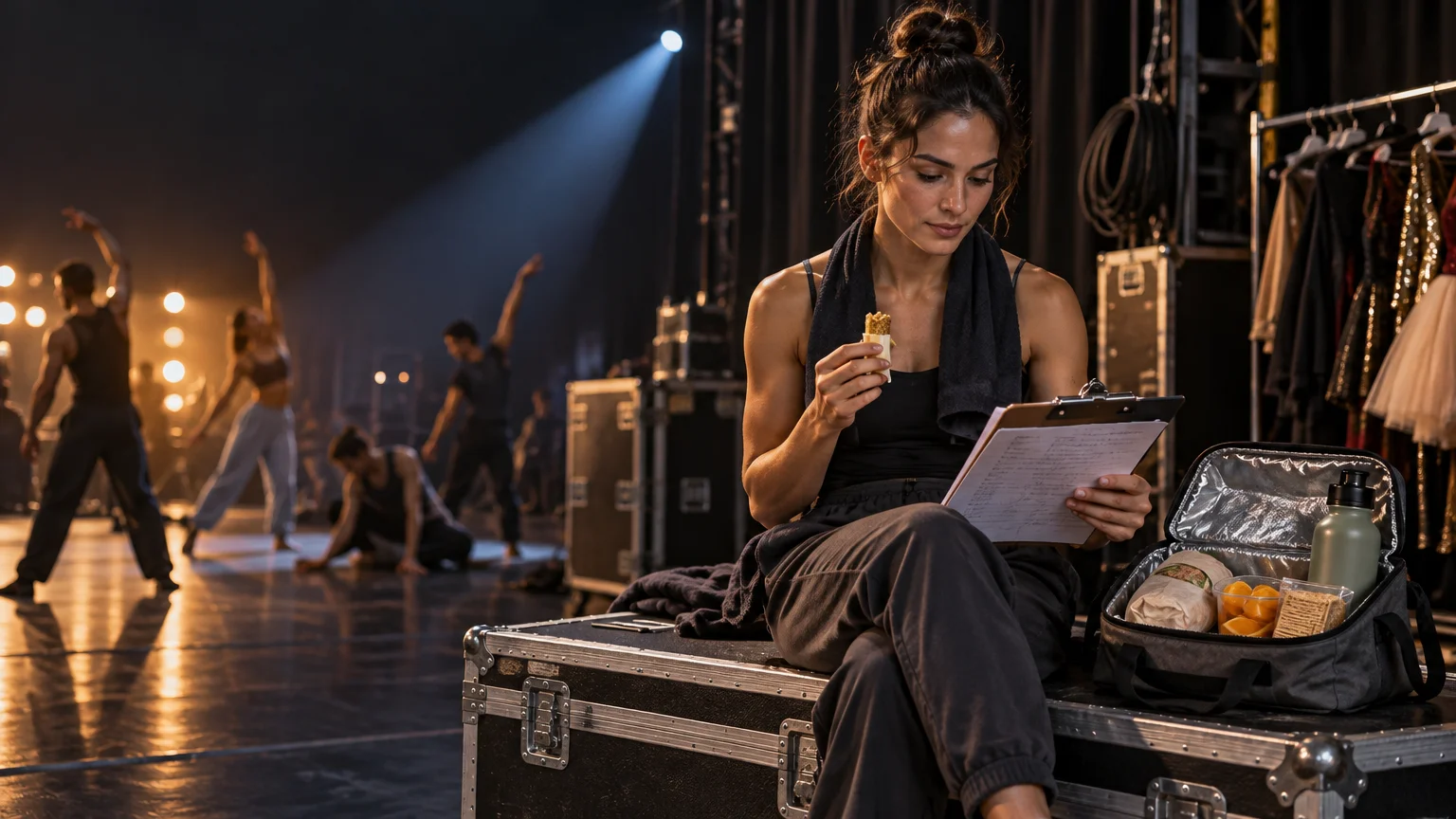
Nutrition Between Rehearsal and Show Call Without Feeling Heavy
TL;DR
Eat the substantial meal early enough to digest it—often about three to four hours before curtain—then use a smaller familiar snack one to two hours before performing if you need it. Emphasize carbohydrate, include moderate protein, and reduce unusually rich, fatty or very high-fiber choices as showtime approaches if those foods make vigorous movement uncomfortable. Drink steadily across the day instead of trying to catch up at places call. Most importantly, test the routine during rehearsals rather than unveiling a daring new menu on opening night.
There is no universal perfect performer pre-show meal. The right choice is familiar, adequately filling and compatible with what the show asks you to do. A vocalist standing at a microphone, a dancer in a nonstop production number and an aerialist working through inversions may all need different portions and timing.
Build the meal around the clock, not a magic food
The gap between rehearsal and show call can look deceptively relaxed on paper. In reality, it may include notes, costume checks, hair, makeup, spacing changes, warm-up and an unexpected production meeting. If eating is left to “whenever there is a minute,” the minute often arrives just before beginners call—when a full meal is least appealing.
Start by working backward from the performance. For a physically demanding show, a practical pattern is a normal day of eating, a substantial meal roughly three to four hours before curtain, and an optional smaller snack closer to the performance. Guidance summarized by the American College of Sports Medicine supports emphasizing carbohydrate with a moderate amount of protein in that earlier meal. Reducing fat and very high-fiber foods near vigorous activity may help performers who are prone to gastrointestinal discomfort.
| Time before curtain | Fueling move | Examples to test in rehearsal |
|---|---|---|
| 3–4 hours | Eat the main pre-show meal | Rice or pasta with a familiar protein and cooked vegetables; a sandwich with fruit; a grain bowl with a moderate amount of toppings |
| 1–2 hours | Add a small snack if hungry or facing a demanding show | Banana with yogurt; toast with nut butter; crackers and cheese; a small smoothie; a familiar snack bar |
| 30–60 minutes | Keep it light and optional | A few crackers, applesauce, a banana or a small amount of a familiar sports drink |
| During a long show or between shows | Use breaks for manageable fuel and fluid | Fruit, pretzels, half a sandwich, yogurt, a small smoothie or another rehearsed portable option |
These are starting points, not compulsory menus. Portion size matters as much as the ingredient list. A giant “healthy” grain bowl can feel far heavier during floor work than a modest sandwich. Conversely, a few bites of fruit may not carry a performer through a long, athletic set. The goal is comfortable readiness—not maximum fullness and not the hollow concentration that comes from under-fueling.
What belongs in the main pre-show meal?
Build the earlier meal around three jobs. Carbohydrate supplies accessible fuel for movement. Protein contributes staying power and supports the broader recovery process. A moderate amount of fat can make a meal satisfying, but a very rich meal close to curtain may sit poorly for some performers.
- Choose a familiar carbohydrate base such as rice, pasta, bread, potatoes, oats or another grain you regularly tolerate.
- Add a moderate portion of familiar protein, such as eggs, poultry, fish, tofu, beans, yogurt or cheese.
- Include produce in an amount and form that works for you. Cooked vegetables or peeled fruit may feel easier than a huge raw salad for performers sensitive to fiber before movement.
- Use familiar sauces and seasonings. Show day is a poor time to discover how your stomach responds to an aggressively spicy dressing.
- Eat enough. Avoiding heaviness should not become a disguised instruction to restrict food before demanding work.
That last point matters in dance. Research reviews have found low energy availability or negative energy balance in some pre-professional ballet and contemporary-dance samples. Dance-specific nutrition evidence remains comparatively limited and often draws from sports research, but the practical message is clear: adequate fueling across the day matters more than chasing a supposedly perfect light pre-show plate. A review of nutrition issues for dancers discusses that broader evidence base.
When nerves make a full meal impossible
Adrenaline can turn an ordinary lunch into an impossible assignment. Travel delays, quick turnarounds and tightly packed calls can do the same. If solid food feels difficult, a lower-bulk option such as a smoothie or liquid meal can be more practical than abandoning fuel altogether. Mixed-macronutrient options combine carbohydrate with protein and are intended to be adapted to individual needs rather than treated as automatic requirements.
Keep the solution simple. A smoothie made with familiar ingredients, drinkable yogurt, soup with bread or a modest liquid meal may work. Test the volume as carefully as the ingredients: downing a large drink immediately before choreography can create its own sloshing problem.
Pack an emergency snack even if catering is promised. Production schedules move. The venue meal may arrive late, contain an ingredient you cannot eat or appear during a costume call. Portable food is not glamorous, but neither is trying to perform a finale while mentally negotiating with an empty stomach.
Hydration should be a steady cue, not a last-minute stunt
Hydrate across the day rather than suddenly drinking a large volume before stepping onstage. Needs change with the venue temperature, costume weight, sweat rate and duration of the show. Both inadequate fluid and excessive drinking can cause problems, so “more” is not automatically better.
Keep a labeled bottle accessible during rehearsal and confirm where drinks can be placed backstage. Add those practical details to the live-event call sheet when the production controls hydration stations, restricted backstage areas or timed breaks. On a hot outdoor date or during a show with heavy costumes, plan access before the spacing rehearsal—not while the opening cue is running.
Electrolyte drinks may be useful in some long, hot or heavily sweating situations, but they do not need to replace every sip of water. Personal sweat losses and working conditions matter. If you have a medical condition affecting fluid or electrolyte management, seek individualized clinical advice rather than relying on a generic backstage formula.
Multi-show days need a second plan
A matinee and evening show cannot be fueled as though only the first curtain exists. Eat breakfast and an earlier meal as normal, use a manageable snack near the matinee if needed, and reserve time for a recovery meal or substantial snack between performances. Performers interviewed about demanding multi-show schedules have described eating before arrival and again between shows, while Birmingham Royal Ballet reports adapting nutrition planning to rehearsal schedules, travel and the realities of ready-made food.
The between-show window may be short, but it is usually more useful than forcing an oversized meal directly before the first curtain. Carbohydrate consumed during prolonged or highly demanding activity can support performance; in show terms, that may mean eating manageable food during a break or between sets.
Touring adds another layer. Advance nearby food options, refrigeration access and hotel breakfast hours alongside the production schedule. The same realism belongs in a tour plan that leaves enough recovery time: meals and sleep cannot be treated as optional gaps around travel.
Do singers need a completely different menu?
Not necessarily. There is no universal evidence-based rule requiring every singer to eliminate coffee, dairy or one notorious “voice food.” Personal response is more useful than backstage folklore. If a particular food reliably aggravates reflux, throat-clearing or stomach symptoms, avoid that known trigger before singing. Do not turn another performer’s trigger into a company-wide commandment.
Food also should not be expected to diagnose or fix a persistent voice problem. The American Academy of Otolaryngology–Head and Neck Surgery guidance on hoarseness recommends laryngeal evaluation or referral when hoarseness does not improve within four weeks, with faster evaluation appropriate when warning factors are present.
Caffeine is not a substitute for lunch
A familiar amount of caffeine may fit some performers’ routines, but caffeine and supplements should not become default pre-show fuel. Sports guidance emphasizes individualized, evidence-informed use that has already been trialed. High caffeine intake can contribute to nausea, anxiety, insomnia and restlessness—the exact quartet nobody wants waiting in the wings. Supplements also introduce safety and contamination considerations.
If you choose caffeine, test the dose and timing during rehearsal, account for an evening finish, and remember that stimulation cannot replace adequate food. Opening-night nerves are already bringing plenty of electricity.
Run a dress rehearsal for your meal plan
Treat nutrition like any other part of show preparation: rehearse it, note what happened and adjust one variable at a time. Use a demanding rehearsal or run-through that resembles the actual call.
- Write down curtain time, scheduled breaks and the realistic eating windows.
- Choose an earlier meal with familiar carbohydrate, moderate protein and a portion you expect to digest comfortably.
- Pack two snack options: one solid and one lower-bulk option for nervous days.
- Drink steadily, then check whether costume, heat or choreography changes your usual needs.
- After the run, note energy, hunger, stomach comfort, concentration and how you felt during the final section.
- Repeat the routine before relying on it for an important performance.
Individual backstage accounts show why this testing matters: some dancers prefer a full meal around three hours before curtain, while others rely on smaller foods during breaks. Those differences are not evidence that one performer is doing it correctly and another is not. They show that timing, appetite and workload have to meet in a routine the performer can repeat.
The practical show-day takeaway
Put the main meal early, keep the closer snack small and familiar, and hydrate before urgency enters the building. Pack a backup, especially on tour or multi-show days. Then rehearse the plan under real movement, costume and timing demands.
The best pre-show meal is not the one with the most impressive wellness vocabulary. It is the one that supplies enough energy, stays comfortable through the choreography and leaves your attention where the audience needs it: on the performance.
References
- Optimal Nutrition for Youth Athletes:
- AIS SPORTS SUPPLEMENT FRAMEWORK
- Nutrition and nutritional issues for dancers – PubMed
- What Do We Know About the Energy Status and Diets of Pre-Professional and Professional Dancers: A Scoping Review – PubMed
- ACSM Information On…
- 9 Facts About Hydration & Electrolytes
- National Athletic Trainers' Association Position Statement: Fluid Replacement for the Physically Active.
- How the Radio City Rockettes Prepare to Dance 90-Minute Shows All Holiday Season Long | SELF
- www.brb.org.uk
- International society of sports nutrition position stand: nutrient timing.
- Treating Professional Voice in the Community | AAO-HNS Bulletin
- Voice Problems: Updates to Treatment and Care of Patients with Hoarseness – American Academy of Otolaryngology-Head and Neck Surgery (AAO-HNS)
- IOC consensus statement: dietary supplements and the high-performance athlete
- IOC consensus statement: dietary supplements and the high-performance athlete
- Snacking in the Wings – The Dance Current
- Your Ideal Pre-Show Prep: A Step-By-Step Guide